Small Batches, Full Stories: Blue Bag Specialty Coffee

Small Batches, Full Stories: Blue Bag Specialty Coffee
Francisco Lopez pulls a shot of Ethiopian Yirgacheffe Gargari and names the farm, the altitude, the processing method. The customer across the bar hasn't asked for this information, but Lopez offers it anyway. At Blue Bag Specialty Coffee, knowing where the coffee comes from isn't a marketing exercise; it's the entire point.
Sofia's specialty coffee scene has grown rapidly over the past decade, with European Coffee Trip documenting over 65 cafes and roasters across Bulgaria. Blue Bag operates differently from most. Rather than chasing volume, the roastery works in small batches, typically under 25 kilograms per roast, allowing for the kind of precision that larger operations sacrifice for efficiency.
The Bar as a Classroom
Lopez, Blue Bag's Head Barista, approaches the espresso machine with the patience of someone who has explained extraction theory hundreds of times and still finds it interesting. His role extends beyond pulling shots. When Blue Bag hosted a coffee tasting at Sapiens in Ruse, Lopez walked guests through three African single origins: the supernatural-processed Ethiopia Yirgacheffe Gargari, a natural Burundi Mpanga from the Cup of Excellence, and a natural Ethiopia Guji. Each coffee came with its story, its altitude, its harvest window.
This is the philosophy that defines Blue Bag's approach. The barista isn't just a technician; the barista is a translator between the farm and the cup.
Verified Farms, Peak Ripeness
Verified farms sounds like marketing language until you understand what it means in practice. Blue Bag imports coffee from producers where every step of the process is documented: the specific lot, the altitude (typically above 1,400 metres for their specialty-grade beans), the harvest timing, the processing method.
Specialty-grade coffee represents the top 10% of global production, scoring 80 or above on the Specialty Coffee Association scale. These beans are traceable to specific regions, farms, or individual lots. Blue Bag's sourcing reflects this standard: they work with washed, natural, honey, and anaerobic processed coffees, each method chosen to enhance the bean's inherent characteristics.
Harvest timing matters more than most coffee drinkers realise. Beans picked at peak ripeness develop sugars and acids that translate into complexity in the cup. Beans picked too early taste grassy; too late, and they ferment unevenly. The difference between a good coffee and a memorable one often comes down to a two-week window on a hillside in Ethiopia or Colombia.
Constraint as Craft
Small-batch roasting is not a limitation. It's a choice that enables quality control impossible at industrial scale.
When roasting 5 to 25 kilograms at a time, the roaster can monitor audible cues like the first crack, adjust temperature in real time, and evaluate each batch by sight, sound, and smell.
Small-batch roasting allows for greater control over the process, ensuring each bean receives attention that mass production cannot replicate.
Blue Bag's team, led by CEO Inna Ivanova and Director Deyan Georgiev, has rebuilt their roasting facility three times over nine years. The company's origin story traces back to 2012 in Mexico, where it was founded by Karla Tammekand, her twin sister Tania, and their father Ron. Inna Ivanova joined in 2013, and the brand eventually made its way to Bulgaria, where the current team developed the roastery into what it is today.
Across Sofia's Specialty Spaces
Blue Bag's coffee appears in over 12 partner locations across Bulgaria. One notable partner is Sapiens specialty coffee and brunch in Ruse, a cafe on ul. Batak 3 overlooking the Danube, where Blue Bag's single origins are served alongside all-day brunch. The partnership reflects shared values: both venues prioritise education and experience over transaction.
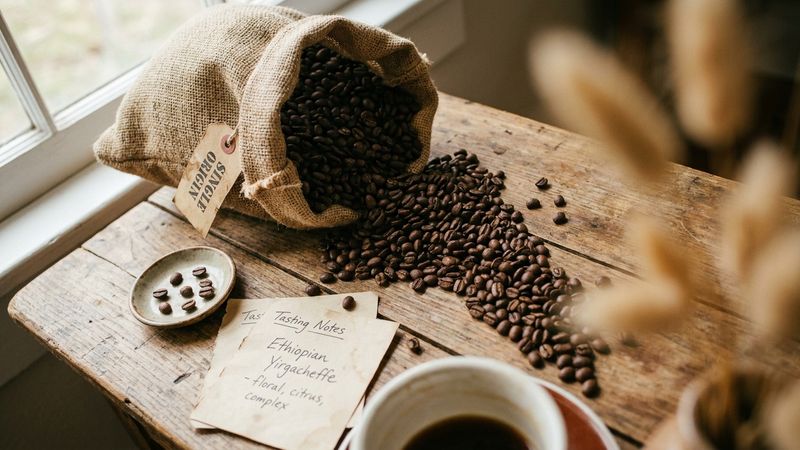
At Sofia Chilli Fest 2024, Blue Bag served espresso, cold brew, and single-origin pour-overs to over 3,000 visitors, with equipment provided by La Marzocco and Ibeco. Events like these demonstrate how the roastery operates: not as a supplier pushing product, but as a participant in Bulgaria's growing specialty coffee culture.
What Happens When the Barista Knows
The next time you order a pour-over or a single-origin espresso, ask where it came from. Not the country, but the farm. The altitude. The processing method. If the barista can answer, you're in a place that cares about the story behind the cup.
At Blue Bag, Francisco Lopez can answer. And that answer changes how the coffee tastes.
Frequently Asked Questions
Q: What does "small-batch roasting" mean in specialty coffee?
A: Small-batch roasting refers to roasting coffee in limited quantities, typically under 25 kilograms per batch. This method allows roasters to monitor each batch closely, adjust temperature in real time, and ensure consistent quality that larger industrial operations cannot achieve.
Q: How can I tell if a coffee is specialty-grade?
A: Specialty-grade coffee scores 80 or above on the Specialty Coffee Association (SCA) scale and represents the top 10% of global coffee production. Look for roasters who provide traceability information: the specific farm, region, altitude, and processing method. If a roaster can name the producer and harvest details, the coffee is likely specialty-grade.
Q: Where can I try Blue Bag coffee in Bulgaria?
A: Blue Bag supplies over 12 partner locations across Bulgaria. One verified partner is Sapiens specialty coffee and brunch at ul. Batak 3 in Ruse, which serves Blue Bag's single-origin coffees alongside brunch. The roastery also participates in events like Sofia Chilli Fest, where their coffee is available to festival attendees.
The Barista