
Georgi Gagov and the Quiet Work of Roasting Well

The 2015 Pivot
Gagov started working with coffee in 1998, long before specialty coffee had a name in Bulgaria. For years, the business operated like most coffee operations in post-communist Eastern Europe: dark roasts, commodity beans, espresso served fast and bitter. The country's coffee culture, as Perfect Daily Grind documented in 2017, was shaped by decades of Soviet-era imports where quantity, not quality, was the guideline.
In 2015, Aroma made a deliberate shift toward specialty roasting. This was not a trend Gagov followed; it was a decision to raise the bar. The timing mattered. Sofia's specialty coffee scene was still nascent, with only a handful of third-wave cafes operating in the city. Gagov bet that Bulgarian coffee drinkers could learn to taste the difference between a commodity blend and a single-origin lot roasted with intention.
Eleven years later, that bet has held.
What SCA Certification Actually Means
Aroma Coffee holds certification from the Specialty Coffee Association (SCA), the global trade organization that sets standards for specialty coffee from green bean to cup. For a roastery, SCA certification is not a badge you hang on the wall; it is a framework for how you source, roast, and evaluate coffee.
In practical terms, this means Gagov and his team follow established protocols for cupping (the standardized tasting method used to evaluate coffee quality), maintain roast profiles that can be replicated batch after batch, and source beans that score above 80 points on the SCA's 100-point scale. The SCA Coffee Design Awards recently recognized Aroma's packaging for a Yemeni microlot scoring 90.25 points, a coffee rare enough to be presented in a wax-sealed glass bottle.
For the customer, SCA certification translates to a specific promise: the coffee you drink today will taste like the coffee you drank last month, because the process behind it is documented and controlled.
Three Locations, One Approach
Aroma operates three locations across Sofia: one on bul. Dondukov Petkov 69, another in the Krasna Polyana neighbourhood on bul. Vardar, and a third near bul. Cherni Vrah at ul. Kishinov 1. The addresses span different parts of the city, from residential neighbourhoods to busier commercial corridors.
What matters is not the geography but the consistency. A regular at the Krasna Polyana location, grabbing coffee before work at 7:30 in the morning, will find the same roast profile and the same extraction standards at the Cherni Vrah shop on a Saturday afternoon. This is harder than it sounds. Specialty coffee is sensitive to variables: grind size, water temperature, extraction time. Maintaining consistency across multiple locations requires training, equipment calibration, and a roasting operation that delivers uniform results.
Gagov's approach treats each location as an extension of the roastery, not as a separate retail operation.
Reserve Lots and What They Mean in the Cup
Aroma's menu distinguishes between Premium Single Origins and Reserve micro-lots.
The difference is not marketing language; it is a matter of sourcing and roast profile.
A Premium Single Origin might be a washed Ethiopian from a well-known region, roasted to highlight its citrus and floral notes. A Reserve lot, like the Yemeni coffee that won the SCA design award, comes from a smaller harvest, often a single farm or cooperative, with a higher cupping score and a more limited supply. The roast profile for a Reserve lot is typically lighter, designed to preserve the coffee's origin character rather than impose a roaster's signature.
For the customer, this means a Reserve espresso will taste brighter and more complex, with acidity that lingers. A Premium Single Origin will be more approachable, with a rounder body and familiar sweetness. Both are specialty coffee; the difference is in the specificity of the story behind the bean.
Depth Over Speed
Gagov has stayed in Sofia for 27 years. He has not chased expansion into other cities or countries. He has not pivoted to cold brew subscriptions or coffee-adjacent merchandise. He has roasted coffee, trained baristas, and built a roastery that operates the same way it did a decade ago, only better.
In a city where specialty coffee is still finding its footing, this kind of consistency matters. It creates a baseline. It teaches customers what to expect from a well-roasted bean. It gives other roasters something to measure against.
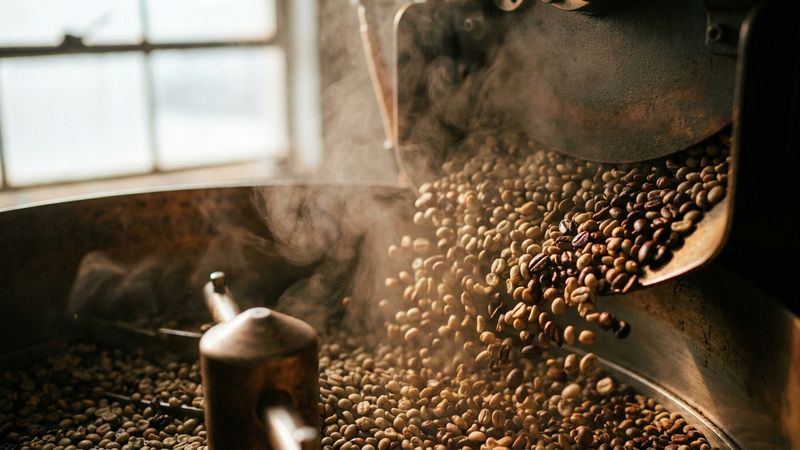
The work of roasting well is not dramatic. It is repetitive, precise, and largely invisible to the person drinking the final cup. But every time a customer at Aroma tastes a coffee and recognizes something specific, something that connects back to a place they will never visit, that recognition is the result of 27 years of showing up and doing the same thing, carefully, again.
Frequently Asked Questions
Q: What does SCA certification mean for a coffee roastery?
A: SCA (Specialty Coffee Association) certification indicates that a roastery follows established protocols for sourcing, roasting, and evaluating coffee. This includes cupping standards, documented roast profiles, and sourcing beans that score above 80 points on the SCA's 100-point quality scale. For customers, it means consistent quality across batches.
Q: Where are Aroma Coffee's locations in Sofia?
A: Aroma Coffee operates three locations in Sofia: bul. Dondukov Petkov 69, bul. Vardar in the Krasna Polyana neighbourhood, and ul. Kishinov 1 near bul. Cherni Vrah. Hours vary by location, with weekday openings typically starting between 7:30 and 8:00 AM.
Q: What is the difference between a Premium Single Origin and a Reserve micro-lot?
A: Premium Single Origins are specialty coffees from well-known regions, roasted for approachable flavour profiles with balanced body and sweetness. Reserve micro-lots come from smaller harvests with higher cupping scores (often 88+ points), roasted lighter to preserve origin character. Reserve coffees tend to be brighter and more complex, with limited availability.
The Artisan