Cacao Roasted Slow, Served Warm

From Pod to Cup
Somewhere in central Sofia, a family roastery is doing something unusual with cacao beans. Not turning them into bars for supermarket shelves, not rushing them through industrial processing, but treating them as what they are: a raw material that rewards patience.
Flow Cacao Roasters operates on a principle that sounds almost counterintuitive in a city where speed often equals success. The beans arrive from farms in Costa Rica and other parts of Latin America. They get roasted in small batches. They become drinking chocolate, ceremonial cacao, and roasted bean snacks. The whole process takes longer than it needs to, and that's precisely the point.
For anyone who has only known cacao as a powder from a tin or a sweet hot chocolate from a café chain, the difference is immediate. This is chocolate that tastes like the fruit it came from, with notes that shift depending on where the beans grew and how they were fermented before they ever reached Sofia.
Single-Origin Excellence
Single-origin cacao means the beans come from one specific place, not blended from multiple sources to create a uniform flavour. The concept mirrors what happened with specialty coffee: once you know where something comes from, you start tasting the soil, the climate, the altitude. Flow Cacao sources from farms in Central America and the Caribbean, with Costa Rica featuring prominently in their ceremonial cacao line.
The roasting happens at lower temperatures than industrial chocolate production typically allows. This preserves more of the flavonoids and antioxidants that make cacao genuinely nutritious, not just comforting. It also keeps the flavour profile intact: the dried fruit notes, the subtle bitterness, the occasional hint of something floral or earthy depending on the harvest.
What arrives in the cup is drinking chocolate that behaves differently from the instant variety. The preparation matters: 20 to 30 grams of chocolate whisked with a small amount of hot water until smooth, then topped up with more water or plant milk. The texture is thick, the temperature matters, and the ritual of making it becomes part of the experience.
Ceremonial Cacao and the Slow Sip
The term "ceremonial cacao" might sound like marketing language, but it has historical roots. Ancient Mesoamerican cultures treated cacao as sacred, reserving it for rulers, priests, and significant rituals. The Maya and Aztec civilizations created a bitter, frothy drink called "xocoatl" that bears little resemblance to modern hot chocolate.
Flow Cacao's 100% ceremonial cacao (priced around 27 BGN / ~€14 for 200g) contains nothing but roasted cacao beans from Upala, Costa Rica. No sugar, no additives, no fillers. The flavour profile includes notes of caramel and fresh fruit, with a richness that comes entirely from the bean itself. It's not sweet, and that's the point: the bitterness is part of what makes it feel like something more than a beverage.
The roastery also produces drinking chocolates at various cacao percentages, from 55% up to 80%, some blended with coconut milk, others with habanero chilli and cardamom in collaboration with Chilli Hills, a Bulgarian family farm growing rare pepper varieties. The Spicy Maya blend (around 26 BGN / ~€13 for 200g) recreates something close to what ancient Mesoamerican drinkers might have experienced: heat, depth, and a slow burn that lingers.
Family Craft in a Working Space
Flow Cacao describes itself as "family-owned," and the scale reflects that.
This is not a factory operation. The roastery won a Bronze at the 2024 Academy of Chocolate Awards, recognition that places it among craft chocolate makers worldwide who prioritise quality over volume.
The products appear at Sofia's Roman Wall market and through stockists like Zoya, the organic supermarket chain with locations across the city. The roastery also operates FINCA cacao & coffee, a chocolateria in central Sofia where visitors can taste the drinking chocolate prepared properly, surrounded by plants and the quiet hum of a space designed for slowing down.
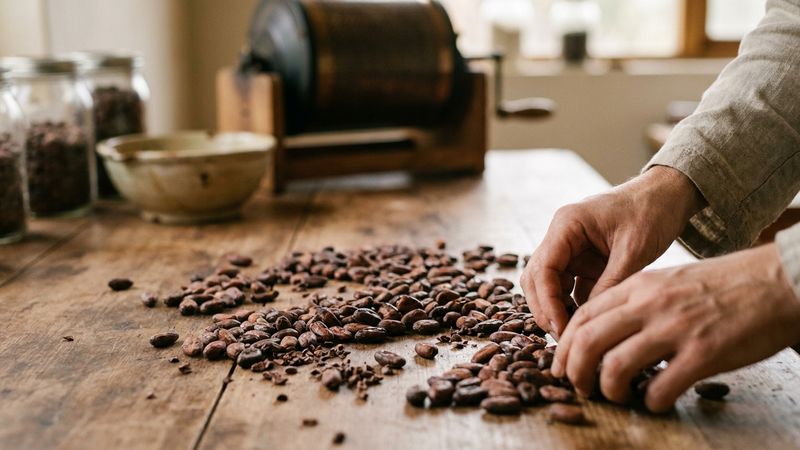
What makes a roastery different from a café is the relationship to the raw material. The beans are the starting point, not an afterthought. Every decision about temperature, timing, and blending happens with the specific characteristics of that harvest in mind. The result is chocolate that changes slightly from batch to batch, because the cacao itself changes.
Choosing Slowness
Sofia's craft scene has grown steadily over the past decade, with specialty coffee leading the way and other artisan producers following. Flow Cacao fits into this ecosystem not as a trend but as a practice: a family that chose cacao as their medium and built a business around doing one thing carefully.
The prices reflect the process. A 200g package of drinking chocolate costs more than a supermarket tin of cocoa powder. But the comparison misses the point. This is chocolate made from fine flavour cacao beans, which represent only about 5-8% of world production according to the International Cocoa Organization. The farmers who grow it receive better prices. The roasters who process it take their time. The person who drinks it gets something that actually tastes like cacao.
For anyone curious about what chocolate can be when treated as a craft material rather than a commodity, Flow Cacao offers an education in a cup. The warmth is real, the flavour is complex, and the pace is deliberately, unapologetically slow.
Frequently Asked Questions
Q: What is the difference between ceremonial cacao and regular hot chocolate?
A: Ceremonial cacao is 100% pure roasted cacao beans with no added sugar, milk, or fillers. Regular hot chocolate typically contains sugar, milk powder, and often less than 30% actual cacao. Ceremonial cacao has a bitter, complex flavour profile and is traditionally consumed for its mood-boosting properties from natural compounds like theobromine and flavonoids.
Q: Where can I buy Flow Cacao products in Sofia?
A: Flow Cacao products are available at Zoya organic supermarket locations across Sofia, at the Roman Wall market, and through their online shop at flowcacao.com. The roastery also operates FINCA cacao & coffee, a chocolateria in central Sofia where you can taste their drinking chocolate prepared on-site.
Q: How much does craft drinking chocolate cost compared to regular cocoa?
A: Flow Cacao's drinking chocolates range from approximately 22-27 BGN (~€11-14) for 200g, depending on the variety. This is significantly more expensive than supermarket cocoa powder, but the product contains single-origin fine flavour cacao beans that are minimally processed and ethically sourced from Latin American farms.
The Artisan