
Nepal's Coffee Economy Offers a Mirror for Bulgaria's Craft Scene
Прочети на български
The scent of floral honey and rose fills the room. In Biratnagar, a city 235 miles from Kathmandu, attendees at a barista training carefully measure water temperature before pouring over bowls of single-origin coffee from districts like Nuwakot, Dhankuta, and Kavrepalanchok. Each coffee is processed differently: Red Honey, Natural Anaerobic fermentation, Natural process. The women who picked these cherries and sorted the unroasted seeds are not present, but their work is in every cup.
This scene, described in a recent Sprudge feature by Ridhi Agrawal, captures something familiar to anyone watching Bulgaria's own craft beverage economy take shape. Nepal is a tea-drinking nation. Visit someone's home, and they offer you chiya. Bump into a friend on the street, and they ask you to join for a cup. Yet coffee is finding its own place, not by displacing tea, but by serving different moments and communities. The pattern echoes what's happening in Sofia, where specialty coffee shops coexist with traditional kafana culture.
Addition, Not Replacement
Yunesh Raj Shrestha and Deena Pradhan, the husband-and-wife founders of Baari Roastery, see coffee as a complement to Nepal's tea tradition.
Coffee is clearly finding its own place in contemporary Nepali life, with meetings, an early start to the workday, and even as an energy booster for gym-goers.
Yunesh Raj Shrestha
The explanation is straightforward: overseas returnees. Nepalis who lived and worked in Australia and Europe returned with new palates and habits formed through daily exposure to cafe culture abroad. In Bulgaria, the same dynamic is visible. Bulgarians returning from Western Europe and North America have driven the growth of roasteries and cafes that prioritise traceability and craft. Diaspora knowledge transfer seeds new industries without erasing what came before.
Smallholder Farming and Women's Work
Nepal's coffee grows between 800 and 1,600 metres, with some regions exceeding that altitude. All of it is produced by smallholder farmers working plots of two to five hectares. There are no large plantations.
This makes the coffee very special.
Abhinayak Malla, founder of WakeCup Coffee
WakeCup Coffee launched in Biratnagar in 2017. The microclimate matters. Warm climates speed cherry ripening, which can diminish quality. Slower ripening at higher altitudes produces denser, more complex beans. Shade-grown plants and careful processing add distinctness.
Women do the majority of the picking and processing work. In many coffee-growing communities, husbands work abroad or in cities, leaving women to manage the farms.
They are essential to the quality and care in our coffee production.
Deena Pradhan
This labour is not a footnote; it is the foundation of the entire supply chain.
According to Nepal's National Tea and Coffee Development Board, the area under coffee cultivation in 2024 and 2025 was approximately 5,501 hectares, yielding 707 tons of green coffee.
Domestic demand outpaces production, requiring 223.76 tons of imports during the same period.
Barista Training as Economic Mobility
Across Nepal, barista courses are marketed as tickets to global careers. D Cafeteria in Dharan trains young people in brewing, bar setup, and cash management. Graduates have gone on to work in Australia, Europe, and the UAE. Coffee shops are also experimenting with subscription models, offering better per-cup prices than buying individually.
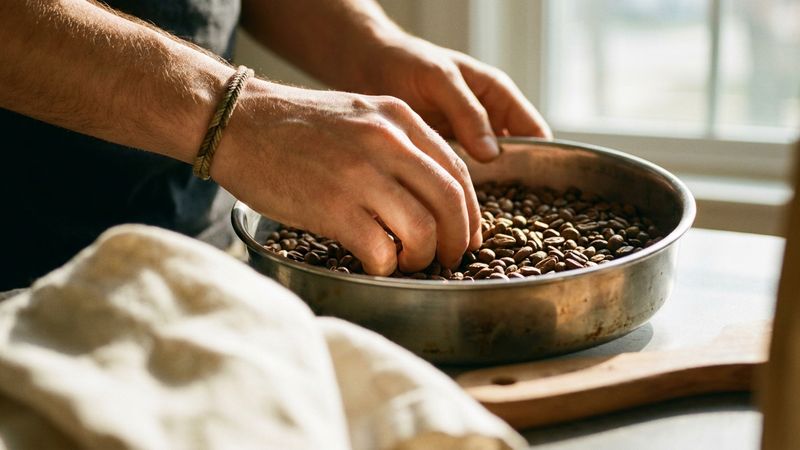
Near Pokhara, Airbnb host Dinesh Kanta Adhikary offers guests a hands-on farm-to-cup experience: picking cherries, pulping skins, roasting beans over fire, grinding, and brewing.
In Sofia, barista training and specialty coffee education are similarly becoming pathways for professional development. The Coffee Association Bulgaria and events like the Good Coffee Festival are building the infrastructure for this kind of knowledge transfer.
Three Pillars of a Craft Economy
Nepal's coffee history stretches back to 1938, when a hermit brought seeds from Burma (present-day Myanmar) to Aapchaur, a hill village in Gulmi District. The first commercial nursery opened in 1981. Today, coffee is grown in over 40 districts.
Baari Roastery, founded in 2020, names each single-origin coffee after its region: Kavre Single Origin, Nuwakot Highlands Washed, Rasuwa Red Honey. This traceability, this insistence on naming the place and the people, is the same principle that drives Bulgarian roasteries working with small-origin producers.
The lesson is not that Nepal is becoming a coffee nation. The lesson is that craft beverage economies are built on three pillars: diaspora knowledge transfer, smallholder producer networks, and community spaces that honour both tradition and innovation. Tea and coffee coexist. Old and new serve different purposes.
Bulgaria's own coffee origin story is already taking shape in the roasteries, training programmes, and cafes of Sofia and beyond.
Frequently Asked Questions
Q: What makes Nepali coffee different from other origins?
A: All Nepali coffee is grown by smallholder farmers on plots of two to five hectares, at altitudes between 800 and 1,600 metres. The slow ripening at high altitude, shade-grown cultivation, and processing methods like Red Honey and Natural Anaerobic fermentation create a distinct flavour profile.
Q: How are women involved in Nepal's coffee production?
A: Women do the majority of cherry picking and processing work in Nepal's coffee-growing communities. Many manage farms while husbands work abroad or in cities, making their labour essential to the quality and care of the final product.
Q: Is Nepal's coffee production enough to meet domestic demand?
A: No. According to Nepal's National Tea and Coffee Development Board, the 2024-2025 green coffee yield was 707 tons from approximately 5,501 hectares, but 223.76 tons were imported to meet growing domestic demand.
The Artisan