Hala Tree Coffee: A Farm-to-Cup Model That Redefines What Transparency Means
Прочети на български
The espresso bar sits in the middle of Waikīkī's bustle, but the coffee in the cup started its journey 300 kilometres away, on volcanic slopes where the same family that designed this cafe also tends the soil. Hala Tree Coffee's new flagship, which opened on July 1, 2026, is not simply another specialty cafe with good equipment and nice lighting. It is a statement about control, traceability, and what happens when a single entity manages every step from cherry to cup.
For anyone in Sofia's specialty coffee scene, where most roasters source green beans through importers, Hala Tree offers an aspirational case study. In Sofia, roasters like Blue Bag Specialty Coffee work with verified farms and peak-ripeness beans in small batches, prioritising traceability and precision. Hala Tree takes that philosophy to its logical extreme: they are the farm.
The Unbroken Chain
The company owns its estate in Captain Cook on the Big Island of Hawaii. They manage the soil, hand-pick the cherries, process, roast, and serve. As co-founder Ellie Schwartz told Sprudge:
We control every single baseline variable from farm to roastery to cup.
Ellie Schwartz
Most specialty roasters buy green coffee from importers who buy from exporters who buy from cooperatives. Each handoff introduces variables. Hala Tree's model eliminates them. The company frames its work as agricultural heritage preservation, tending Kona Typica trees and experimenting with varieties like SL34 and Geisha on their own land.
The QR Code That Actually Means Something
Transparency in coffee often stops at the word single-origin on a bag. Hala Tree pushes further. Every retail bag carries a QR code. Scan it, and you can trace the exact harvest window, processing milestones, and roast profile of those specific beans.
Specialty coffee shouldn't feel like a closed gate.
Ellie Schwartz
The QR system bridges what she calls "the disconnect that historically exists in the global coffee supply chain." For a customer at the bar, the story of their cup is not a marketing narrative but a verifiable record.
Precision Tools for Unblended Beans
The equipment choices reflect the coffee philosophy. A three-group Nuova Simonelli Black Eagle Maverick Gravimetric espresso machine sits at the centre, paired with twin Mahlkönig E80T grinders. The slow bar uses Kalita Wave 185 brewers, the same device that took Hala Tree to the national finals in the US Brewers Cup, alongside V60s for their lighter-roasted Catalyst lineup.
The standard espresso offering is a Medium Roast Washed Typica, the most classic expression of Kona coffee. The second grinder rotates through experimental coffees: SL34, Geisha, and a three-day anaerobic natural Maragogype from the Catalyst line, hyper-limited nano-lots representing what the company calls "the absolute pinnacle of our agricultural experimentation."
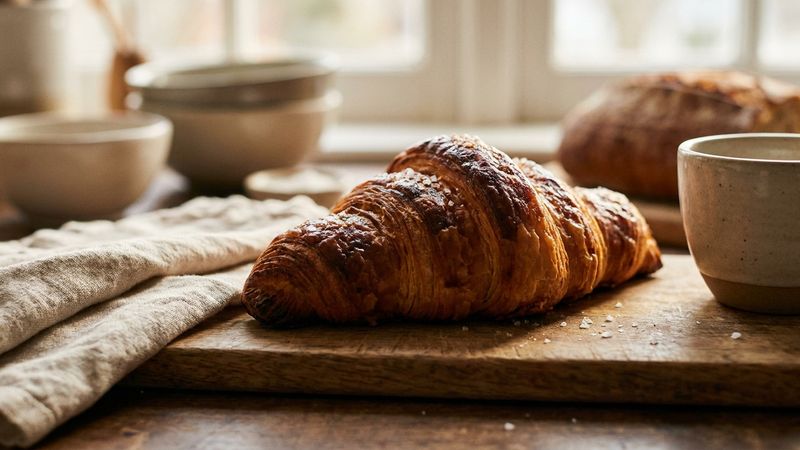
An on-site artisan bakery, led by a resident pastry chef, produces all doughs and pastries fresh daily using locally sourced Hawaiian ingredients.
Signature drinks are still in development but will feature techniques borrowed from craft cocktail bars: atomised aromatics, hydrosols, and non-sugar-based flavour delivery.
Sustainability at the Soil Level
For Hala Tree, sustainability starts with regenerative agriculture on the Big Island: mindful water conservation during wet-fermentation processing and ethical labour standards with transparent wages. Because they run a true farm-to-cup operation, their carbon footprint is drastically reduced compared to traditional importers. In the Waikīkī build, they prioritise hyper-local sourcing for the pastry menu and partner with eco-conscious neighbours to reduce single-use waste.
The space was designed in-house by co-founder Danielle Orlowski, a professional interior designer who previously practised in France. She balanced a minimalist aesthetic with industrial-modern touches, bridging the company's rustic agricultural roots with a refined urban sanctuary. Every detail, from the ergonomics of the espresso bar to the choreography of the pastry case, reflects both her design expertise and the brand's philosophy.
What This Model Means
Hala Tree Coffee is not a template that can be copied everywhere. Owning a farm in Kona is not an option for most roasters. But the underlying principles, radical transparency, uncompromising traceability, and the integration of craft food with specialty coffee, offer a lens for thinking about what true origin means in any city's coffee culture.
The cafe is located at 2380 Kūhiō Ave., Honolulu, within the Lilia Waikīkī development. More information is available on their official website and Instagram.
Frequently Asked Questions
Q: What does "vertically integrated" mean for a coffee company?
A: It means the company controls every stage of production, from farming and harvesting to processing, roasting, and serving. Hala Tree owns its estate in Captain Cook, Hawaii, and manages the entire chain from soil to cup.
Q: How does Hala Tree's QR code traceability system work?
A: Every retail bag includes a QR code that customers can scan to view the exact harvest window, processing milestones, and roast profile of those specific beans. This provides verifiable origin information rather than marketing claims.
Q: What equipment does Hala Tree use at their Waikīkī flagship?
A: The cafe uses a three-group Nuova Simonelli Black Eagle Maverick Gravimetric espresso machine with twin Mahlkönig E80T grinders. The slow bar features Kalita Wave 185 brewers and V60s for pour-over.
The Artisan