Fifteen Years of Crowds, and the Coffee Still Tastes Right

Fifteen Years of Crowds, and the Coffee Still Tastes Right
Somewhere in the middle of the Truman Brewery, a grinder whirs at 8:30 in the morning. The queue for a single-origin pour-over stretches past a latte art station where a barista is mid-rosetta, wrist tilted at exactly the angle that separates a good pour from a forgettable one. Outside, Brick Lane smells like roasting coffee and street food. This is London during the London Coffee Festival, and the density of specialty coffee in one postcode is almost absurd.
For Sofia's growing specialty coffee community, London offers a useful case study. Not because the Bulgarian capital should copy it, but because the question London answered over fifteen years remains relevant everywhere: can a coffee festival grow without losing the craft that made it worth attending?
Scale Without Dilution
The numbers are significant. The 2025 edition drew over 22,000 visitors across four days, with more than 260 exhibitors and 275 artisan coffee and gourmet food brands. The festival has quadrupled in size since its founding in 2011 by the Allegra Group, and in 2022, William Reed acquired the event to expand its reach further.
What keeps it from becoming a generic trade show? Structure. Two days are reserved for industry professionals, with programming tailored to roasters, cafe owners, and equipment buyers. The weekend opens to the public, but the educational spine remains: The Lab hosts panel discussions on sourcing, sustainability, and market trends. Brew School offers 45-minute deep dives into extraction. Coffee Masters, the festival's signature barista competition, runs across seven disciplines in a knockout format that rewards versatility over single-skill dominance.
The festival stays at the Truman Brewery, a former brewery turned creative complex in Shoreditch, five minutes from Shoreditch High Street station. The venue matters. Shoreditch has been London's specialty coffee heartland for two decades, home to roasters like Square Mile Coffee Roasters (co-founded by 2007 World Barista Champion James Hoffmann) and Origin Coffee, whose Charlotte Road cafe sits a short walk from the festival grounds. The location reinforces the message: this is not a pop-up event parachuted into a convention center. It belongs to the neighborhood.
The People Behind the Bars
London's specialty coffee scene runs deep. Monmouth Coffee Company, founded in 1978, predates the term "third wave" by decades. Climpson & Sons started as a coffee cart on Broadway Market in 2002 and now operates a B Corp-certified roastery under the railway arches in Hackney. These are not brands chasing trends; they are institutions that trained the baristas who trained the next generation.
The festival reflects this depth. La Marzocco's Roasters Village brings together independent roasters from across Europe. Latte Art Live runs throwdowns and workshops on Modbar equipment. The programming assumes a baseline of knowledge while remaining accessible to newcomers. A home brewer can attend Brew School and leave with a better understanding of extraction; a professional can attend The Lab and hear industry leaders debate the future of direct trade.
Competition standards are high. Coffee Masters tests cupping, brewing, latte art, order speed, signature drinks, and espresso blending. The format rewards baristas who can do everything well, not just one thing brilliantly. That philosophy shapes the broader scene: London's cafes expect versatility, and the training culture reflects it.
From Niche to Mainstream
The audience has shifted. In 2014, the festival attracted around 16,000 attendees. By 2025, that number exceeded 22,000. The growth reflects a broader change in British coffee culture. Specialty coffee is no longer a niche interest; it is a mainstream expectation in urban centers.
The festival has adapted by expanding its programming without abandoning its core.
Coffee-based cocktails, street food, and DJ sets draw a wider audience. But the educational content remains central. The Lab's 2026 programming includes panels on regional coffee scenes outside London, from Brighton to Glasgow, acknowledging that specialty coffee is no longer a London-only story.
Lessons for a Younger Scene
Sofia's specialty coffee market is smaller but growing fast. European Coffee Trip lists 65 cafes and roasters across Bulgaria, with the majority concentrated in Sofia. The city has its own emerging festival culture, and the question of how to scale without compromise is already relevant.
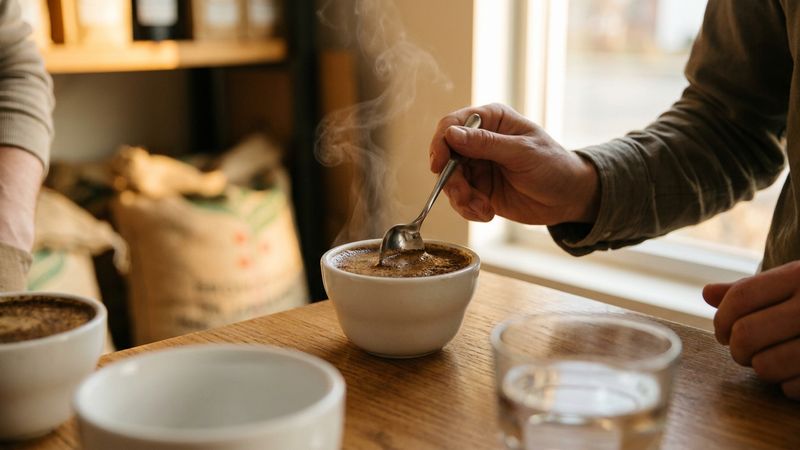
London's model offers a few principles. First, venue matters: a festival rooted in a neighborhood with existing coffee culture feels different from one held in a generic exhibition hall. Second, structure protects quality: separating industry days from public days allows programming to serve both audiences without diluting either. Third, education is not optional: workshops, panels, and competitions create value beyond the transaction of buying a cup of coffee.
Sofia's distributed cafe network, with roasters and specialty bars spread across neighborhoods from Oborishte to Lozenets, mirrors London's geography in miniature. The infrastructure exists. The question is whether the city's coffee community can build programming that matches the quality of what's already in the cup.
After the Crowds Leave
The harder question is what happens when the festival ends. London's specialty coffee scene did not emerge from the festival; the festival emerged from the scene. Monmouth was roasting for 33 years before the first London Coffee Festival. Square Mile was already a wholesale powerhouse. The event amplifies what already exists.
For any city building a coffee culture, the festival is not the foundation. It is the celebration of work that happens the other 361 days of the year: the barista dialing in a new single-origin at 6 a.m., the roaster adjusting profiles by half a degree, the cafe owner deciding to stock a €14 bag of Gesha instead of a €8 blend. The festival makes that work visible. But the work comes first.
Frequently Asked Questions
Q: When did the London Coffee Festival start, and who organizes it now?
A: The London Coffee Festival was founded in 2011 by the Allegra Group. In 2022, UK hospitality company William Reed acquired the event and continues to organize it at the Truman Brewery in Shoreditch, East London.
Q: How many people attend the London Coffee Festival?
A: The 2025 edition attracted over 22,000 visitors across four days, with more than 260 exhibitors and 275 artisan coffee and gourmet food brands participating. The festival has quadrupled in size since its founding.
Q: What is Coffee Masters, and how does it work?
A: Coffee Masters is a multi-disciplinary barista competition held during the London Coffee Festival. Sixteen baristas compete head-to-head across seven disciplines: cupping, brewing, latte art, order challenge, signature drink, and espresso blending. The knockout format rewards versatility, and the winner receives a cash prize.
The Barista