
A Week in a Spoon: How Castronovo Chocolate Makes Time Taste Different
At Castronovo Chocolate in Florida, a week-long bean-to-bar process transforms heritage cocoa into single-origin bars using 19th-century techniques. Every step matters, every step takes time, and the best moment to taste chocolate might be before it's finished.

The Spoon Is Warm
The spoon is warm. Denise Castronovo dips it into the melanger, a stone grinding machine that has been turning for hours and will continue through the night. She hands it to a visitor with a giggle that suggests she has done this hundreds of times and still finds it delightful. The chocolate on the spoon is not finished, not yet a bar, not yet wrapped. It is somewhere in the middle of a week-long transformation from fermented cocoa bean to single-origin dark chocolate.
Denise Castronovo
This is my favorite part. I love tasting the chocolate when it is in this machine.
This is Castronovo Chocolate, a bean-to-bar factory in Stuart, Florida, run by Jim and Denise Castronovo. It is the only artisanal bean-to-bar operation in South Florida, and it operates on a principle that feels almost radical in an industry dominated by industrial shortcuts: every step matters, and every step takes time.
Sourcing as the First Act of Making
Before the roasting, before the grinding, before the warm spoon, there is the question of where the beans come from. Castronovo sources cocoa through Fair Trade and Direct Trade relationships with farmers in Central and South America. All ingredients are organic: naturally fermented heritage cocoa beans, evaporated cane juice, and cocoa butter.
Jim Castronovo
The best time to visit is on Mondays when we roast our beans.
The roasting happens at low temperatures, a choice that preserves delicate flavour compounds that higher heat would destroy. This is not a marketing decision. It is a taste decision, and it sets the tone for everything that follows.
For those of us watching Sofia's craft food scene evolve, this approach to sourcing offers a useful model. The city's specialty coffee culture has already taught consumers to ask where beans come from and who grew them. Chocolate is the natural next frontier. What Castronovo demonstrates is that ethical sourcing is not a separate category from quality; it is the foundation of it.
The Week-Long Process
Bean-to-bar chocolate is not fast. At Castronovo, the process unfolds over roughly a week, and each stage removes something unwanted while adding something essential.
After low-temperature roasting, Denise cracks the beans by hand to extract the nibs, the small pieces of pure cacao that will become chocolate. These are winnowed to remove the papery husk, then ground into a paste. The paste enters the melanger, where stone wheels conch it with gentle warmth and constant movement. Conching is the stage that removes bitter acids and develops the chocolate's final flavour profile.
Denise Castronovo
It is low in sugar. We put it in a few hours ago and it will continue overnight without stopping.
The low sugar content is not a health claim. It is a flavour philosophy. When sugar dominates, it masks the natural complexity of the cacao. When it recedes, the origin speaks.
Denise Castronovo
Our chocolate is like wine. No two batches taste the same.
After conching comes tempering, the controlled crystallization of cocoa butter that gives chocolate its characteristic snap and gloss. Then molding. Then hand-wrapping each 4 oz. bar. Jim and Denise do all of this themselves, using techniques that would have been familiar to chocolate makers in the early 19th century.
Why 19th-Century Techniques Still Work
There is a temptation to frame this kind of craft as nostalgia, a romantic return to simpler times. That framing misses the point. Jim and Denise use these methods because they produce better chocolate, not because they are vintage.
Industrial chocolate-making prioritizes speed and consistency. Beans are roasted at high temperatures to save time. Conching is shortened or skipped. Sugar and additives compensate for flavours that were never developed. The result is chocolate that tastes the same every time, which is precisely the problem.
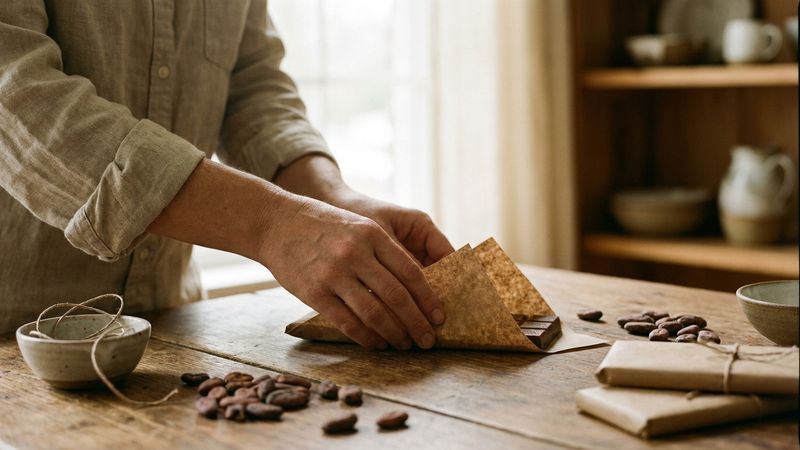
Castronovo's approach accepts variation as a feature. Each batch reflects its origin, its fermentation, its roast. The hand-wrapping is not a performance; it is the final step in a process where human attention has been present at every stage.
They also make truffles and chocolate chip cookies, which suggests that craft does not require austerity. The discipline is in the process, not in limiting what you make.
What This Means for Sofia's Craft Scene
Sofia's food culture is in a moment of transition. Specialty coffee has established that process matters, that sourcing matters, that the person behind the counter can explain where your beans came from and why they taste the way they do. The same consciousness is beginning to emerge around bread, fermented foods, and small-batch spirits.
Chocolate is next. Bulgaria has its own history with cacao, and a growing number of makers are exploring what bean-to-bar production could look like here. What Castronovo offers is not a template to copy but a philosophy to consider: that slowness is not inefficiency, that variation is not inconsistency, and that the best time to taste something is often before it is finished.
The factory is open Monday through Friday, 10 a.m. to 5 p.m., and Saturday, 10 a.m. to 3 p.m. It is located at 555 S Colorado Ave., Stuart, FL 34994. You can reach them at (561) 512-7236 or castronovo@outlook.com.
If you cannot visit, the question remains: what would change if we made one thing this carefully?
Frequently Asked Questions
Q: What is bean-to-bar chocolate?
A: Bean-to-bar chocolate is made by a single producer who controls every step from raw cocoa beans to finished bars. This differs from most commercial chocolate, where manufacturers buy pre-processed cocoa mass. The process typically takes a week and includes roasting, cracking, winnowing, grinding, conching, tempering, and molding.
Q: How does Castronovo Chocolate source its cocoa beans?
A: Castronovo uses Fair Trade and Direct Trade relationships with farmers in Central and South America. All ingredients are organic, including naturally fermented heritage cocoa beans, evaporated cane juice, and cocoa butter.
Q: What is conching and why does it matter?
A: Conching is a process where chocolate paste is continuously mixed with gentle heat, sometimes for 24 hours or more. It removes bitter acids and develops the chocolate's final flavour. At Castronovo, the melanger runs overnight without stopping.
Q: Why does Castronovo use low sugar in their chocolate?
A: Low sugar allows the natural flavours of the cacao origin to come through. When sugar dominates, it masks complexity. Castronovo's approach treats sugar as a supporting ingredient, not a primary one.
Q: When is the best time to visit Castronovo Chocolate?
A: According to owner Jim Castronovo, Mondays are ideal because that is when they roast their beans. The factory is open Monday through Friday, 10 a.m. to 5 p.m., and Saturday, 10 a.m. to 3 p.m.
Q: Where is Castronovo Chocolate located?
A: The factory and shop are at 555 S Colorado Ave., Stuart, FL 34994. Contact them at (561) 512-7236 or castronovo@outlook.com, or visit their website for more information.

